• Home
  • Design Insights
  • Education Book Design
  • Consumer Book Design
  • Marketing Design
  • Say Hello!
Menu

Edwin Kuo

Connecting strategy and execution with design systems
  • Home
  • Design Insights
  • Education Book Design
  • Consumer Book Design
  • Marketing Design
  • Say Hello!
shutterstock_1676520124.jpg

How Storytelling and Design Changed the Way We Reacted to COVID-19

May 3, 2020

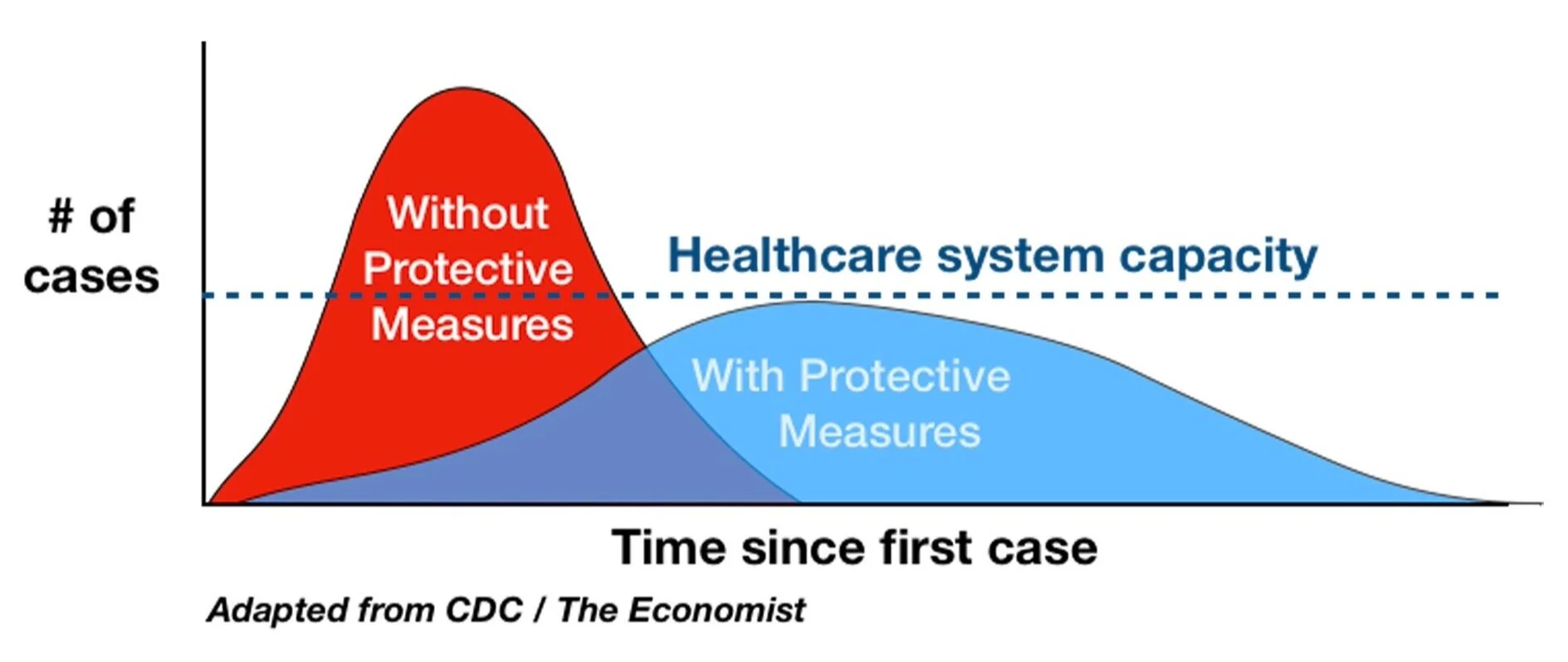
The Flatten the Curve infographic is the defining image of the pandemic, and it offers an excellent example of the value of design. Understanding how this is an effective design tool can open up new opportunities for use in other parts of life and business. However, the value and purpose of design continue to be a confusing topic. So, when an instance like the Flatten the Curve graphic comes up, it presents an excellent opportunity to talk about the value of design. 
11SCI-VIRUS-TRACKER1-superJumbo.jpg

First, we need to understand; What is design?

There are many definitions for design, but they are too general or outdated. It’s essential to understand what design has evolved into. Through this, we can better see its value to creating human experiences and business strategy. Design is a problem-solving process that creates an engagement system that inspires a new behavior or comprehension that promotes improvement for people or business objectives. Good design accomplishes this through an intentional experience that focuses on the user’s needs. This could be a lifestyle improvement through product design, a user experience on a website, or even marketing and revenue growth through strategic design. 

What makes design such a confusing subject is because it’s both a noun and a verb. If “design” is a noun, it’s the thing that designers make, an object. If “design” is a verb, then it’s the thing that designers do; it’s a process. The noun creates and visualizes a product while design the verb is a creative and strategic process. Designers are experts in facilitating human experiences, and a successful design is one that brings both the noun and verb together using a creative problem-solving process. Creativity is a critical part of the process of finding connections between elements that will build human-centered solutions and business strategy. 

bmwblog

bmwblog

An example of everyday design that we interact with is a car interior. BMW or a Jeep wants you to feel a certain way when you sit in one of their cars. This provides an environment that communicates their brand message and business strategy. The distinct differences between each of the experiences are designed to make the driver feel and behave a certain way. Both examples present a brand design message with a functional purpose that’s specific to the model. These bring together both the noun and the verb of design.

jeep.com

jeep.com

The impact of COVID-19

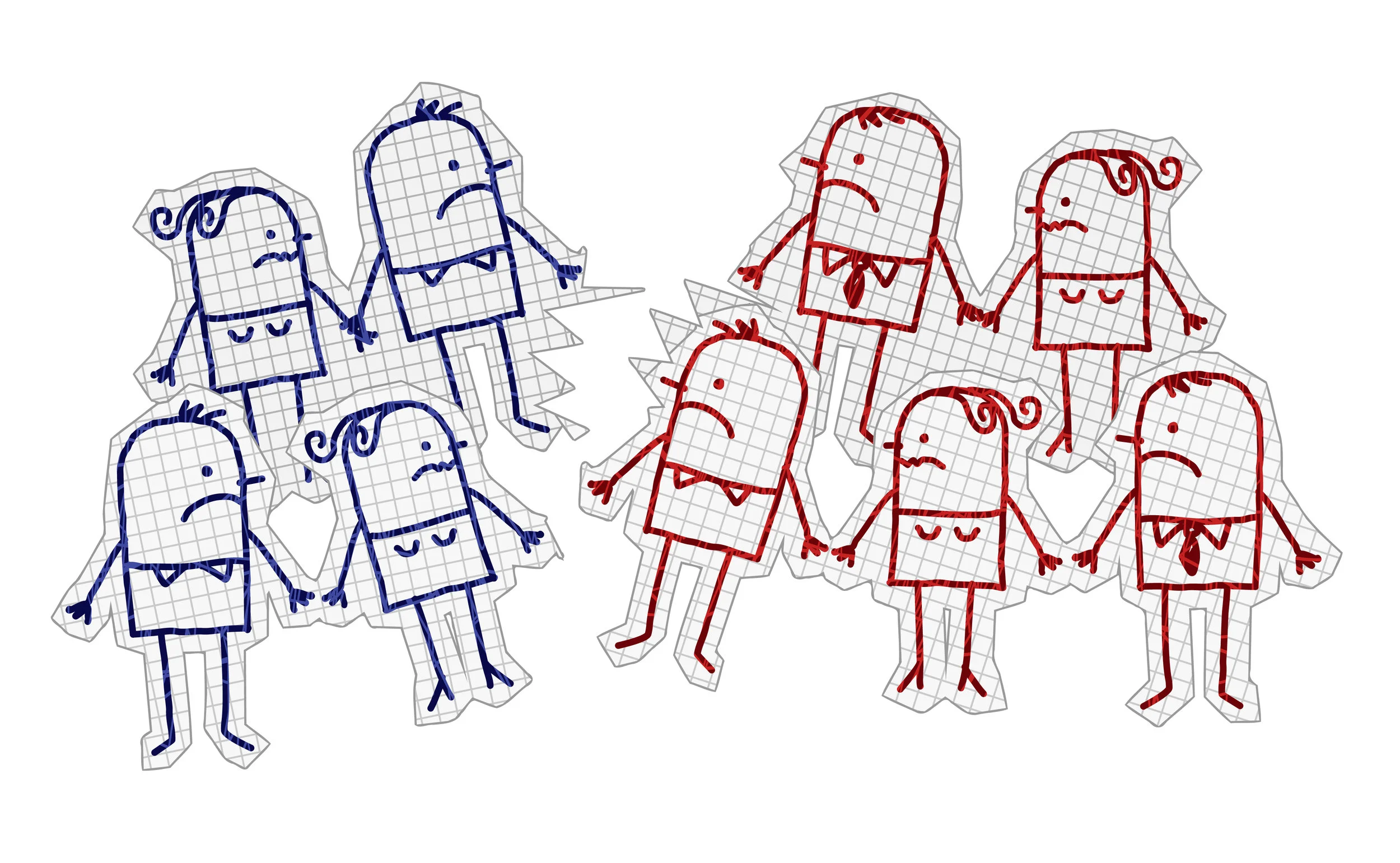
The initial reaction to the COVID-19 virus in the US exposed all the gaps and challenges in the way we learn and communicate. Mass hysteria, frustration, negativity, and incomplete and misinformation permeated social media and news outlets. What’s real, what’s fake, and how should we feel? It’s become too easy to get “information” from social media headlines and memes. These illicit quick and strong emotional responses, but easily send people down the path of negativity or unconstructive responses and behaviors. 

We have been re-wired to forget that we’re all working towards a bigger picture or goal. We’ve lost sight of the context. The algorithms behind how we learn and communicate only show us the bits that we’re supposed to see. With context and understanding of the higher purpose removed, individual interpretation drive polarized conversations toward group think failure. 

Memes and more memes

The reaction and subsequent bewilderment over toilet paper are a perfect example of where it’s all gone wrong. Memes about hoarding toilet paper flooded social media. Memes are the perfect example of how effective a simple visual story can influence thought, spur action, or create a change in behavior. Through all the meme posts, one visual piece appeared that would change the COVID-19 conversation. 

The value of stories

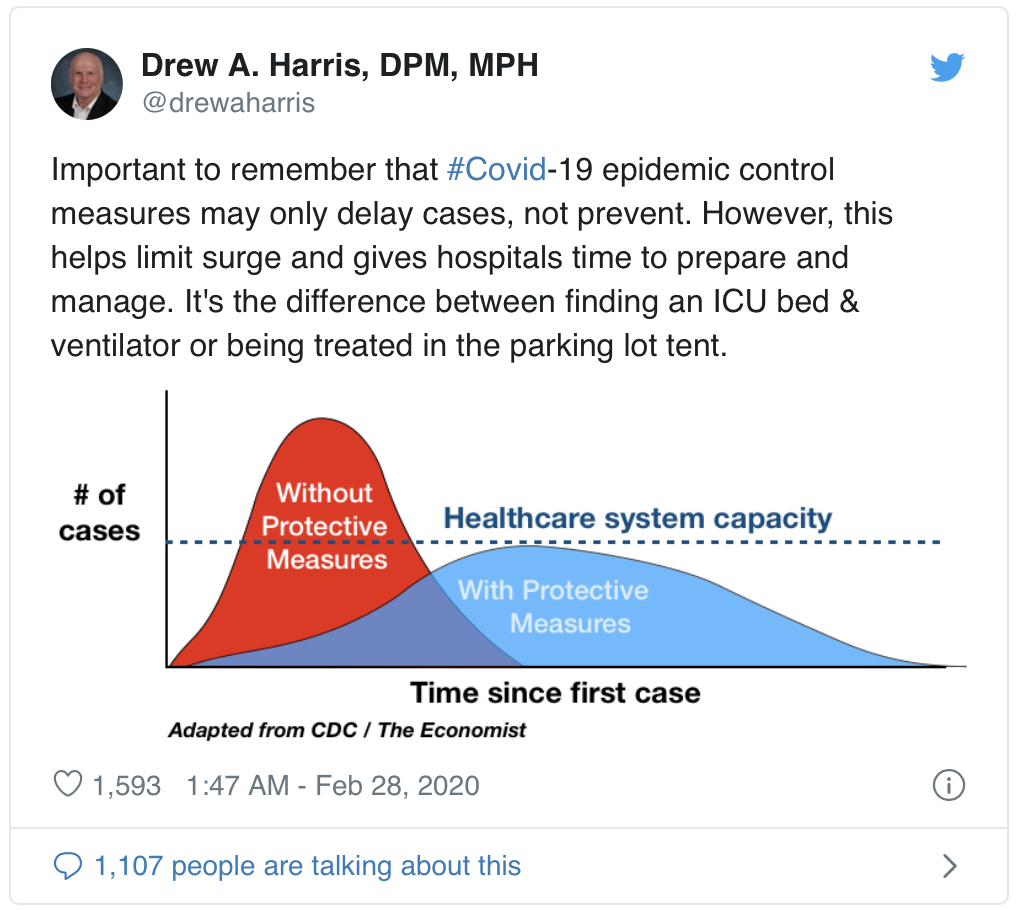
We needed a way to get people to understand the importance of social distancing to slow the spread of COVID-19 and to avoid overburdening the healthcare system, and this was the Flatten the Curve image. The graphic had a profound effect on the way we discussed and learned how to mitigate and manage the spread of COVID-19. The graphic visualized the inaction and action scenarios in a simple visual format, but also shared the context of the situation. The image presented a comparison between inaction and action and allowed people to understand the directive and outcome. 

The Flatten the Curve meme shared a story of inaction vs. action that connects to our need for optimism and safety. This was all accomplished through a visual narrative that enhanced the understanding of the bigger context. This story had an immediate and powerful connection to people within the context of the pandemic.
Screen Shot 2020-05-03 at 8.06.16 PM.png

COVID-19 created a rapidly evolving environment, where news and information changed so quickly that it was difficult for people to keep pace. It became imperative to focus the conversation that would help drive the next steps. The infographic has existed for several years, but most recently appeared in the Economist. This inspired Dr. Drew Harris, a population health analyst and Assistant Professor and Jefferson College of Population Health, to redraw it and promote it through social media. The graphic, which started as a simple epidemiological tool to present the importance of managing the surge of patients at hospitals, became a powerful tool. 
The New York Times, May 3, 2020

The New York Times, May 3, 2020

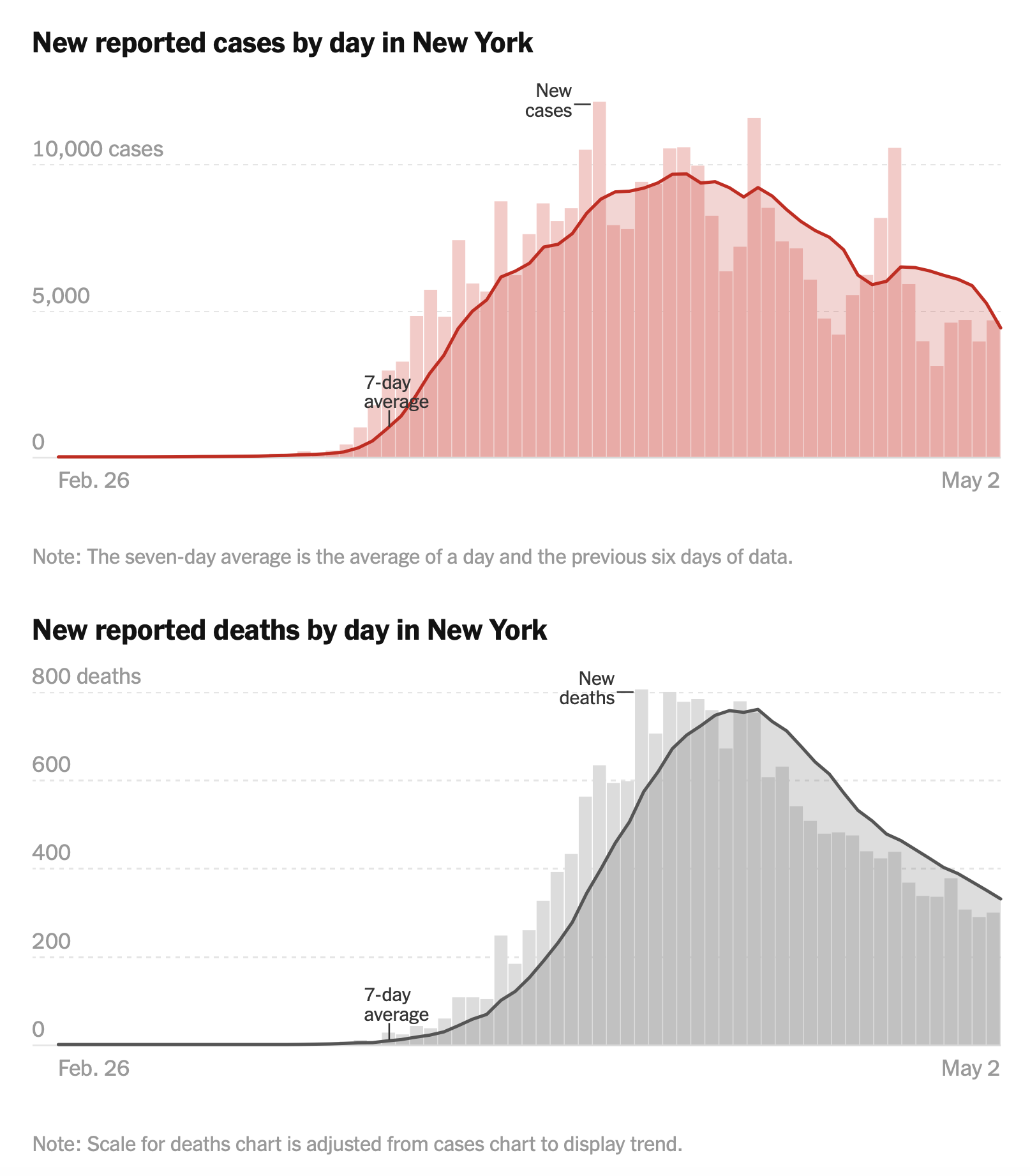
The graphic presented itself as both a noun and a verb. The visualization of the relationship between the curves is the design as a noun part. It was also able to mobilize action through the story it told. With the addition of data to the graph, it became a tool for future presentations of information. This is how it acts as a verb. Most importantly, the infographic’s story and purpose were able to connect to people through a relevant communication or messaging medium.

Since many of us are confined to our homes right now, we can look around for other well-designed experiences. Look around for products, physical or digital that share a story, inspire action, and provides an improvement for the user and the brand. Identify the problems that they solve and the benefits they offer. This could be a well-designed mixer or cooking pot, a TV remote, or a website that you frequent. A smart thermostat or doorbell are examples of good design as well. Lego used the design system to create a business strategy that connects entertainment and education. The best designs are the ones that are so good that they are invisible to the user. They create seamless, meaningful connections and benefits to the user. 

Further reading 

The story behind ‘flatten the curve,’ the defining chart of the coronavirus

Flattening the Coronavirus Curve

Flattening the coronavirus curve goes way beyond science | Expert Opinion
In Insights Tags Design Thinking, COVID-19, Flatten the Curve, Value of Design
Shutterstock - KimHD

Shutterstock - KimHD

The Six Ways Groupthink is Dividing Our Country

March 21, 2018

We are living in a period of groupthink failure where our minds can be hacked to create further divisions in our country. How did we get to this place and where do we go from here?

Read More
In Insights Tags Facebook, Behaviors, Groupthink, Human-Centered, Changing Behaviors
Shutterstock - MJgraphics

Shutterstock - MJgraphics

Design Thinking Needs an Update

March 15, 2018

The way we look at design thinking needs to be updated to reflect the complexities of our current world. It also needs to be more focused so a broader audience can understand its value and purpose.

Read More
In Insights Tags Design Thinking, Storytelling, Human-Centered, Design-led, Industrial Revolution, Design process
Shutterstock - turgaygundogdu

Shutterstock - turgaygundogdu

If you design it, they will come: An optimistic view through the design lens.

February 15, 2018

Can we scale up the design process to solve the worlds biggest and most wicked problems? Sure, why not?

Read More
In Insights Tags Design Thinking, Purpose-driven, Behavior Change, Psychology, Adam Grant, Cass Sunstein, Reed Hastie, Nir Eyal, Susan Cain, Divided Population, Wicked Problems
Shutterstock - Besjunior

Shutterstock - Besjunior

Expect the Unintended: Consequences of the New Tech Age

August 4, 2017

We are now solidly living within an industrial revolution. Industrial revolutions are driven by technology and business, and create massive changes to our culture and behavior. Along the way, they create a host of unintended consequences.

Read More
In Insights Tags Unintended Consequences, Attention Economy, Data Ethnography, Design Thinking, Strategic Design, Technology, Tristan Harris, Time Well Spent, Twitter, Facebook, Groupthink, Cass Sunstein, Reed Hastie, Cathy O’Neill
Shutterstock / MOHAMED ABDULRAHEEM

Shutterstock / MOHAMED ABDULRAHEEM

Making design matter in all the right places

July 12, 2017

Does design matter at zero-waste collection stations at a music festival? If you look carefully, you can find strategic design opportunities everywhere. Sustainability efforts require an awareness and understanding that will help transform behavior over time. As we look at reinforcing or changing behaviors, it’s the design process that will help drive the solutions.

Read More
In Insights Tags Changing Behaviors, Design Strategy, Pleasantville Music Festival, Strategic Design, Zero-Waste, Recycling, PleasantvilleRecycles
Shutterstock - Alexander Ryabintsev

Shutterstock - Alexander Ryabintsev

WHO’s the Boss: Know Who the WHO Is

March 24, 2016

In order to properly identify who the WHO are, you must identify their main behavior points. There are four in all: Identity, Engage, Mechanics, and Technology. These pieces all exist within CULTURE. CULTURE shapes our values, needs and standards. CULTURE creates unwritten rules, expectations and emotional reactions. CULTURE is also shaped by history and helps to develop future trends. This information is necessary to create a complete picture of who people really are and which of their needs must be fulfilled in order to create a meaningful experience.

Read More
In Insights Tags Culture, Decision-making, Demographics, Problem solving, Psychology, Psychographics, Simon Sinek, WHO, golden circle
Shutterstock - siloto

Shutterstock - siloto

Design is a Misunderstood Concept on Wall Street

February 18, 2016

In order to look beyond the boundaries that Wall Street constructs around organizations, we need to connect right- and left-brain thinking. Design thinking seeks to do just that. To be successful, designers need to present the value of design thinking in a way that people can understand. This requires change in the way they talk.

Read More
In Insights Tags Apple, Category Boundaries, Daniel Pink, Uber, Wall Street, Revaluation, Design Thinking, Samsung, gary cohn, goldman sachs, bloomberg tv
Shutterstock - Lightspring

Shutterstock - Lightspring

Creating the New World Order: Explaining the Connection Between Hybrid and Design Thinking

January 25, 2016

What is Hybrid Thinking? How do Hybrid and Design Thinking work and interact to make new, successful, human-centric solutions? How can they help you navigate an ambiguous and changing business landscape?

Read More
In Insights Tags Creativity, Hybrid Thinking, Digical, Bain, T-shaped thinker, Polymaths, Design Thinking, barnes and noble, amazon books, jump associates, david peterson, julius genachowski, carlyle group, the clayton christens institute, polymaths, t-shaped thinkers, leonardo da vinci, steve jobs, neil degrasse tyson, susan cain, quiet revolution, gene simmons, disney, mymagic+, magicband, oscar healthcare, dev patna, bain & company, digical®
Photo by Ross Pattinson

Photo by Ross Pattinson

20 Life Lessons from Mountain Biking

December 10, 2015

Career and leadership development are part of the design thinking process. To effectively manage change and understand the complexities of the business landscape, one needs to have an understanding of what makes you unique. Can mountain biking teach you how to navigate all life’s bumpy trails? Can it change the way you see yourself, build your confidence, and give you a better understanding of who you are? To me, the answer to all these questions is a resounding yes.

Read More
In Insights Tags career development, leadership development, Design Thinking, mountain biking, life lessons
Shutterstock - pogonici

Shutterstock - pogonici

Capitalism, the Design Thinking Way

October 16, 2015

We have operated within an open market capitalism model for so long that the change in the conversation and outlook is terrifying to most people—but the end of capitalism is not going to happen any time soon. But we do need to create a balance between the human experiences and needs when we look to create new solutions.

Read More
In Insights Tags schumpeter, the economist, innovation, anti-capitalism, pope francis, bernie sanders, capitalism, clayton christensen, disruption, design, creative destruction, joseph schumpeter, Design Thinking
Shutterstock - StepanPopov 

Shutterstock - StepanPopov 

Design Thinking Can Give You A Competitive Advantage. What Questions Should You Be Asking?

September 11, 2015

What makes one company different from the next one? Who is different and why? How do you connect to your core user and how does this correlate to dollars and cents? Present the following questions to ask yourself and your organization. Sometimes you can arrive at a different solution by asking a different question. These questions are specific to organizations, media and marketing but can be adjusted for other industries.

Read More
In Insights Tags design thinking, itsdesignthinking, designthinking, questions, organization, media, communication, value proposition, competitive advantage
Shutterstock - Radoman Durkovic 

Shutterstock - Radoman Durkovic 

What is the Role of Design in the Age of the Machine?

September 4, 2015

Design overlays the human experience on top of technology. The importance of the designer grows from the need to incorporate empathy and the human experience into our technology products.

Read More
In Insights Tags itsdesignthinking, design thinking, technology, machine, human-centric, design solutions, empathy, trends, evil robot, user experience, Trends, Machine, Evil Robot, Technology, design, Human-Centered, User Experience
Shutterstock - PGMart

Shutterstock - PGMart

Reimagining the Airline Travel Experience: A Discussion Topic

September 2, 2015

The airline industry is a perfect place for design to reimagine the experience. Are there any current airlines that are designing a human-centric experience that isn’t directed solely at first class travelers?

Read More
In Insights Tags design thinking, design thinking. itsdesignthinking, edwin kuo, airline, user experience, economic value, new york times, human-centric experience, Travel, Human-Centered, human-centric, Design Systems, User Experience
Shutterstock - igor.stevanovic

Shutterstock - igor.stevanovic

We are what we think. Designing a positive media message.

August 16, 2015

Design and media together are a powerful team in creating and shaping opinions, both positive and negative. Promoting adversarial relationships fuels negative emotions like fear and anger. As effective as this type of communication can be, it increases the divide between groups and can further enhance existing biases and conflicts. Bringing people together with design thinking.

Read More
In Insights Tags design, media, shaping opinions, negative emotions, communication, itsdesignthinking, design thinking, designthinking, ecosystem, system, message, negativity, positive message, decisions, Disruptive innovation, Design Systems, Ecosystem, Happiness, Media, Positive thinking
Shutterstock - ra2studio 

Shutterstock - ra2studio 

When is a Car not Just a Car? A Discussion about Value Proposition.

July 15, 2015

Identifying the value proposition is the key point. This is how companies or products solve or satisfy people's needs. By analyzing the value proposition and the mechanics of the value creation, one can begin to compare adjacent systems, technologies and products that have a similar value proposition.

Read More
In Insights Tags value proposition, design thinking, designthinking, itsdesignthinking, henry ford, automobiles, self driving cars, user needs, edwin kuo, adjacent industry, Automobiles, Disruptive innovation, User Needs, Value Proposition
Shutterstock - NLshop 

Shutterstock - NLshop 

Can a Redesign of News Media Change the Way We Think?

July 2, 2015

Change the way news media presents information and ideas across their channels. If media plays a role in dividing our society, then media must take on some of the work needed to rebuild trust and to bring us together. Designing programming that can engage us with the proper information and data is a step in the right direction. We need the proper information in order to seek out the right answers for our rapidly changing society and culture.

Read More
In Insights Tags cass r. sunstein, reid hastie, groupthink, itsdesignthinking, designthinking, sesame street, trust, media, news, ideological divide, consequence thinking, change, edwin kuo, Change, Behavior Change, Design-driven, Media, Trust, user needs
Shutterstock - jannoon028 

Shutterstock - jannoon028 

Design a Better Story

June 24, 2015

Design Thinking uses language to create its narrative. Because Design Thinking solutions work by connecting different parts of the business, building a storyline is important to explaining the process and its value. Creating a cohesive narrative is vital to communicating the ideas effectively.

Read More
In Insights Tags design thinking, itsdesignthinking, designthinking, story telling, narrative, presentation, pixar, steven pinker, the sense of style, arc of cohesion, story-telling, pixar s 22 rules of storytelling, story, emotional connection, Narrative, Pixar, Storytelling
Shutterstock - Andrey Armyagov 

Shutterstock - Andrey Armyagov 

What Good is a Career Reboot if You Can’t Fit Through the Door?

June 10, 2015

Astronaut Chris Hatfield’s autobiography, An Astronaut’s Guide to Life on Earth, begins with him floating in the airlock, preparing to take his first spacewalk. "Poised on the edge of the sublime, I faced a somewhat ridiculous dilemma: How best to get out there?", he writes. "The hatch was small and circular, but with all my tools strapped to my chest and a huge pack of oxygen tanks and electronics strapped on to my back, I was square. Square astronaut, round hole.”

Read More
In Insights Tags Career, career development, Opportunity, Chris Hatfield, Marvel Comics, vulture.com, Brian Michael Bendis, Spider-, Spider-Man, Harvard Business Review, Biz Stone, Twitter
Shutterstock - Sfocato 

Shutterstock - Sfocato 

Putting the Pieces Together to Make a Stronger Ecosystem

June 7, 2015

The recent Verizon/AOL merger is a game changer. What Verizon appears to be creating is an ecosystem, one with great potential and one that its competitors cannot match. None of them have a comparable mix of mobile, web, TV and delivery platform and infrastructure. Verizon’s acquisitions appear to be designed to provide editorial content and advertising on many different media channels. The company is shifting its focus on to the “empowered consumer.”

Read More
In Insights Tags Design Systems, ecosystem, Media, Strategic Design, technology, aol, verizon, communication channels, advertising, content, delivery platform, verizon/aol merger
Older Posts →

Latest Posts

Featured
Nov 29, 2023
Unshattered: A Catalyst for Life-Changing Opportunities
Nov 29, 2023
Nov 29, 2023
May 3, 2020
How Storytelling and Design Changed the Way We Reacted to COVID-19
May 3, 2020
May 3, 2020
Aug 3, 2019
Are you looking for a different way to solve our plastic problem?
Aug 3, 2019
Aug 3, 2019
Mar 21, 2018
The Six Ways Groupthink is Dividing Our Country
Mar 21, 2018
Mar 21, 2018
Mar 15, 2018
Design Thinking Needs an Update
Mar 15, 2018
Mar 15, 2018
Feb 15, 2018
If you design it, they will come: An optimistic view through the design lens.
Feb 15, 2018
Feb 15, 2018
Feb 7, 2018
Connecting dots and finding the future of design
Feb 7, 2018
Feb 7, 2018
Aug 4, 2017
Expect the Unintended: Consequences of the New Tech Age
Aug 4, 2017
Aug 4, 2017
Jul 12, 2017
Making design matter in all the right places
Jul 12, 2017
Jul 12, 2017
Mar 24, 2016
WHO’s the Boss: Know Who the WHO Is
Mar 24, 2016
Mar 24, 2016

EDWIN KUO - edwin@edwinwebsite.net